News Article
Highlights from NVIDIA CEO Jensen Huang's GTC Berlin Keynote
AI factories are evolving to run agents, while physical AI is emerging as the next frontier.
Back to News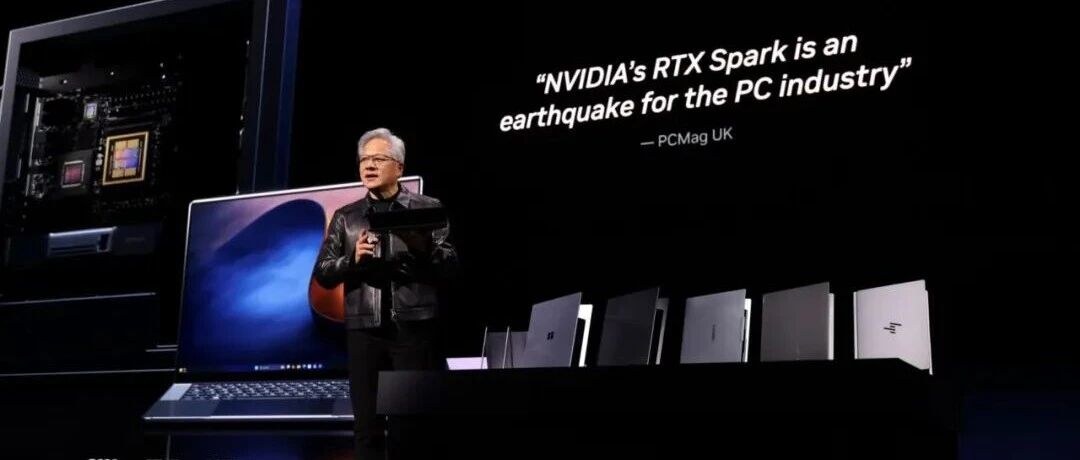
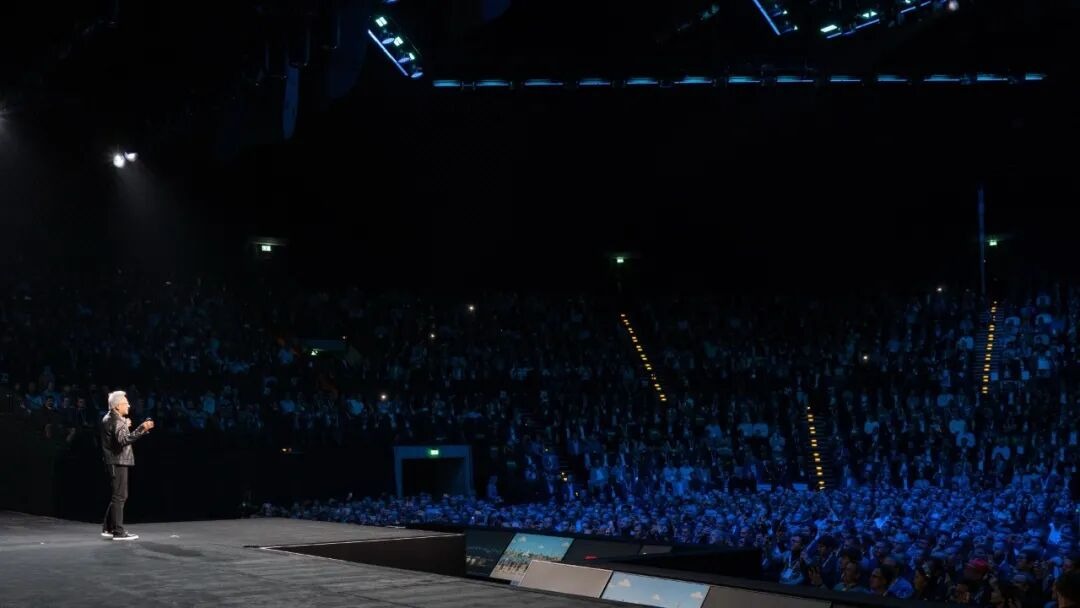
NVIDIA founder and CEO Jensen Huang delivered the keynote at GTC Berlin. The keynote came during NVIDIA's week-long tour of Europe, following stops in Paris, London, Stockholm, and Dublin and engagements with more than 12,000 partners. "After decades of development in the computer industry, we are now at the beginning of a new industrial revolution," Huang said.
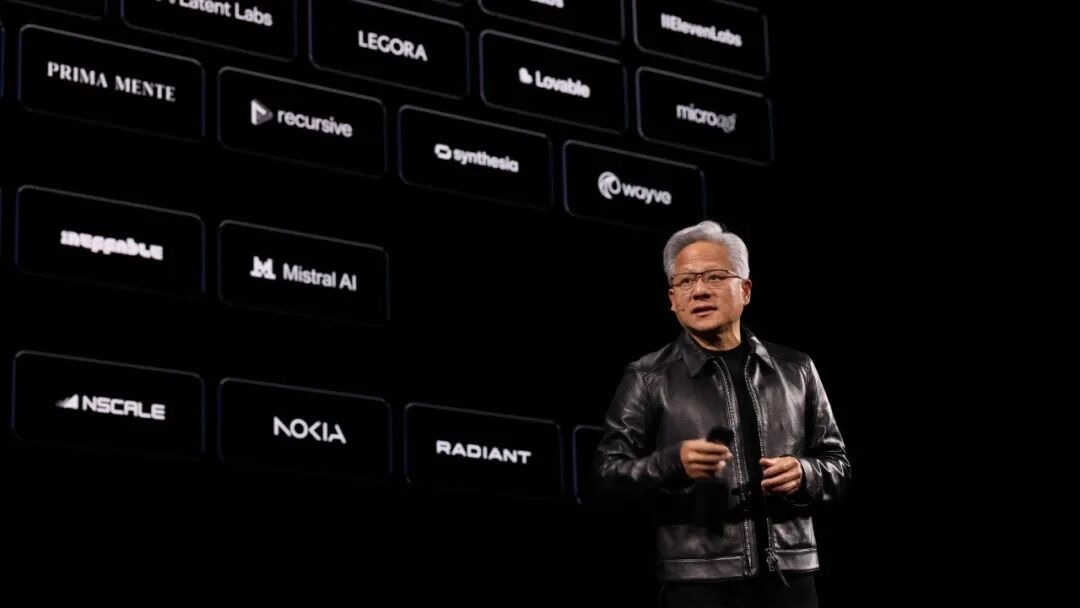
AI Factories Take on a New Form
Huang positioned NVIDIA's full-stack AI factory as a comprehensive platform for building and operating AI infrastructure, spanning hardware, system software, CUDA-X libraries, and models.
"This represents the full range of technologies required to create an AI factory. It is the system NVIDIA is building today, and it is the foundation for helping Europe integrate into the AI ecosystem and participate in the AI economy," Huang said.
He said Vera Rubin is now in full production, extending NVIDIA's computing platform beyond models and large language models to process complete AI agents. He also showcased several of NVIDIA's latest rack-scale hardware products.
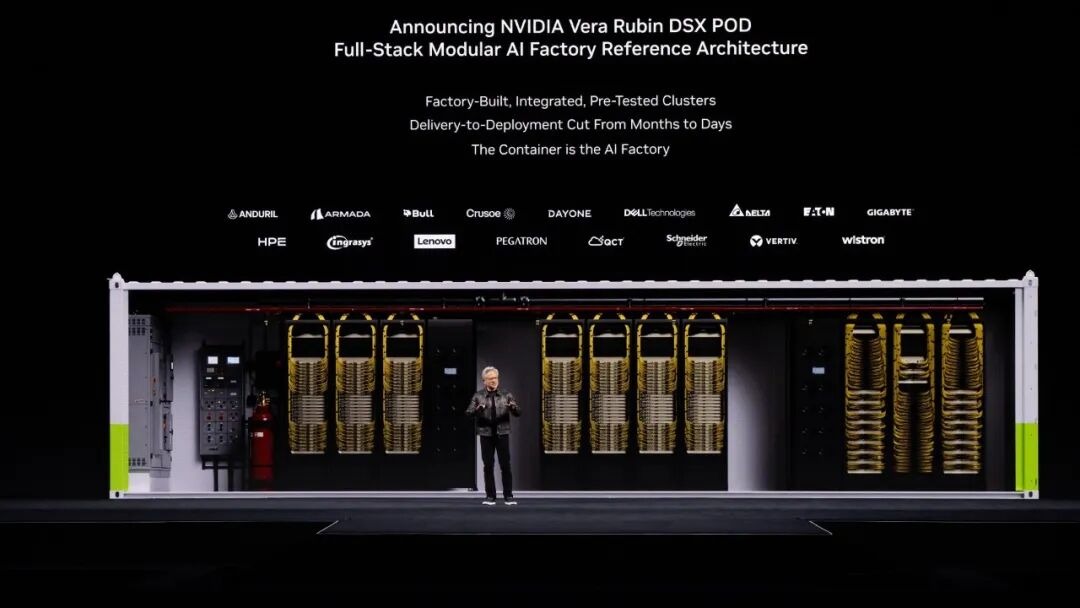
Huang then announced NVIDIA DSX POD, a reference design for a complete NVIDIA Vera Rubin AI factory. Partners build it inside modular containers, with integration and validation completed before delivery. With DSX POD, on-site deployment can be shortened from six months to just 14 days once the facility is ready.
Agents Are the New Computing Platform,
and Security Is an Engineering Challenge
Huang said agents think, reason, iterate, and use tools. As agents become increasingly useful, their token consumption rises as well.
NVIDIA's solution is the OpenShell reference architecture for secure AI agents. This full-stack design is built on NVIDIA OpenShell, an open-source, policy-controlled runtime environment with a kernel-level sandbox between an agent and the systems it may affect.
Open Models Turn Expertise into an Advantage
Huang introduced NVIDIA's open models as starting points for building AI tailored to specific needs.
NVIDIA's frontier open models can be used across industries: Nemotron for language, Cosmos for world foundation models, GR00T for humanoid robots, Alpamayo for intelligent vehicles, Ising for quantum-classical computing, and Earth-2 for physics AI.
NVIDIA Provides a Knowledge Layer for Agents
Huang then introduced the NVIDIA Agent Knowledge Foundation. A collection of models and libraries, it connects agents to enterprise data, including unstructured information in documents and structured information in databases.
He also highlighted Nemotron tools that can parse documents, embed queries, and rerank relevant information, as well as NVIDIA Kumo, a new model for making predictions from structured data.
NVIDIA CUDA-X
Accelerated Tools for Agents
Huang then introduced NVIDIA CUDA-X, describing it as a collection of accelerated computing libraries used extensively in science, engineering, research, creative work, and other fields.
Huang said these libraries can accelerate simulators, solvers, and data processing engines, which agents can call as tools when performing real-world tasks.
Agents Go to Work in Laboratories, Factories,
and Engineering
A video demonstrated how the NVIDIA Agent Toolkit brings together enterprise knowledge, models, and tools, featuring three industry examples from Lila Sciences, Siemens, and Dassault Systèmes.
Telecom Operators Become Distributed AI Infrastructure
Huang said AI is transforming the telecommunications industry, improving spectrum efficiency and turning cell sites into distributed AI infrastructure.
He described 100,000 sites and distributed data centers with capacity on the order of 100 billion watts. After nearly eight years of work, Huang said NVIDIA and Nokia had completed their first commercial call on T-Mobile's network.
AI Enters the Treatment Room
Healthcare and life sciences companies are using NVIDIA technology to advance drug discovery and expand patient care.
NVIDIA and Siemens Healthineers are developing AI-based radiation therapy technology.
Nemotron agents coordinate treatment planning, while the Isaac for Healthcare platform and Omniverse libraries create digital twins of equipment and patient anatomy to simulate tumor targeting. Holoscan and IGX Thor connect real-time imaging and sensor data, enabling adaptive treatment delivery in real time as the patient moves.
The Road Ahead: Mobility Companies
Join the NVIDIA Automotive Ecosystem
Huang said the NVIDIA Hyperion computing platform is being adopted across more fleets, connecting robotaxis to ride-hailing services through assisted-driving software.
Bolt's partnership with Lucid, along with Mercedes-Benz, Volkswagen Commercial Vehicles, and Einride, demonstrated assisted-driving use cases based on the NVIDIA Hyperion computing platform and its potential for Level 3 and Level 4 autonomous vehicles and future robotaxi fleets.
A Humanoid Robot Reference
Built for Robotics Researchers
Huang next announced Agile ONE SN, a humanoid robot reference built on Isaac GR00T. It has 31 degrees of freedom and is designed to reduce researchers' setup time from weeks to days. It is expected to launch next year.
Personal AI Gets a New Machine
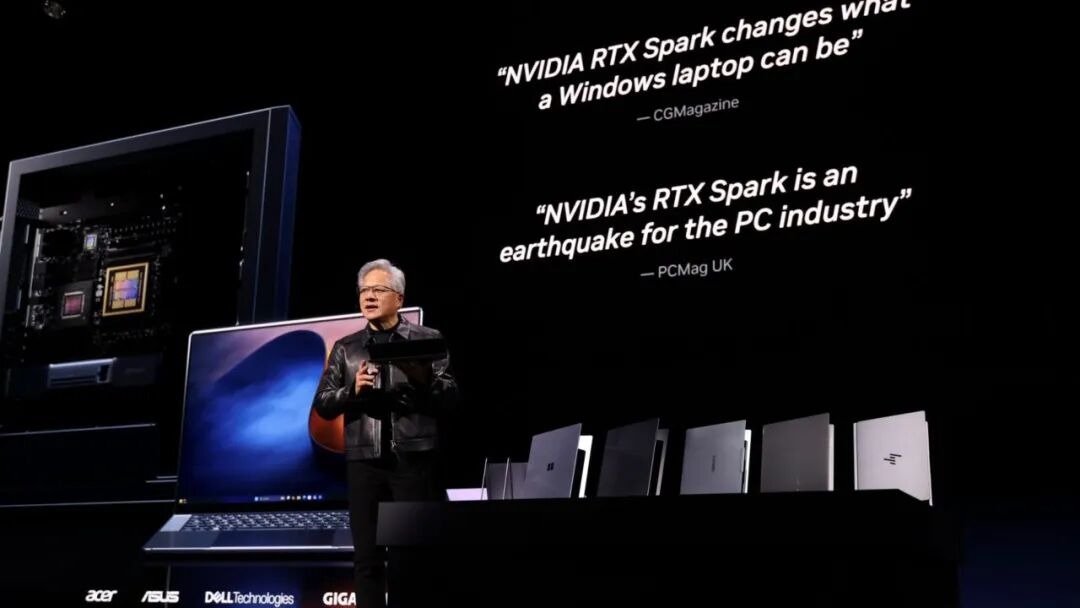
Huang concluded by introducing the RTX Spark laptop released the previous week. It brings RTX graphics technology and NVIDIA's full-stack AI platform to a slim, premium Windows PC, delivering accelerated creation, immersive gaming, and powerful local AI experiences.
Huang then played a video showing how an agent helped train Hugging Face's Microduck. The agent built and simulated a training environment in Isaac Sim, sent the training job to the cloud, brought the learned policy back to RTX Spark for evaluation, and finally deployed it to a physical robot.
The Full Lineup
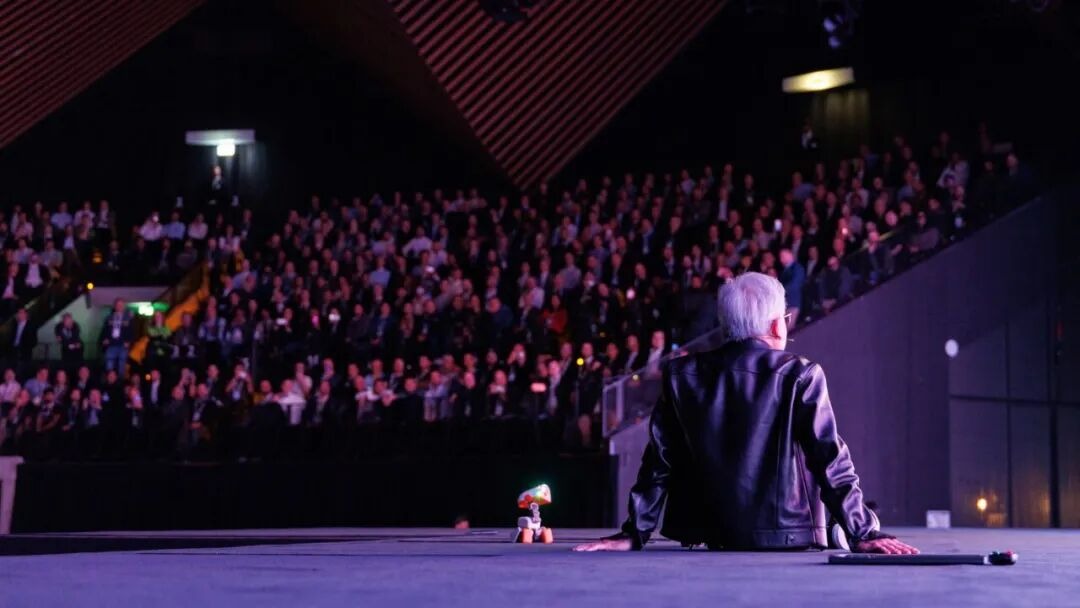
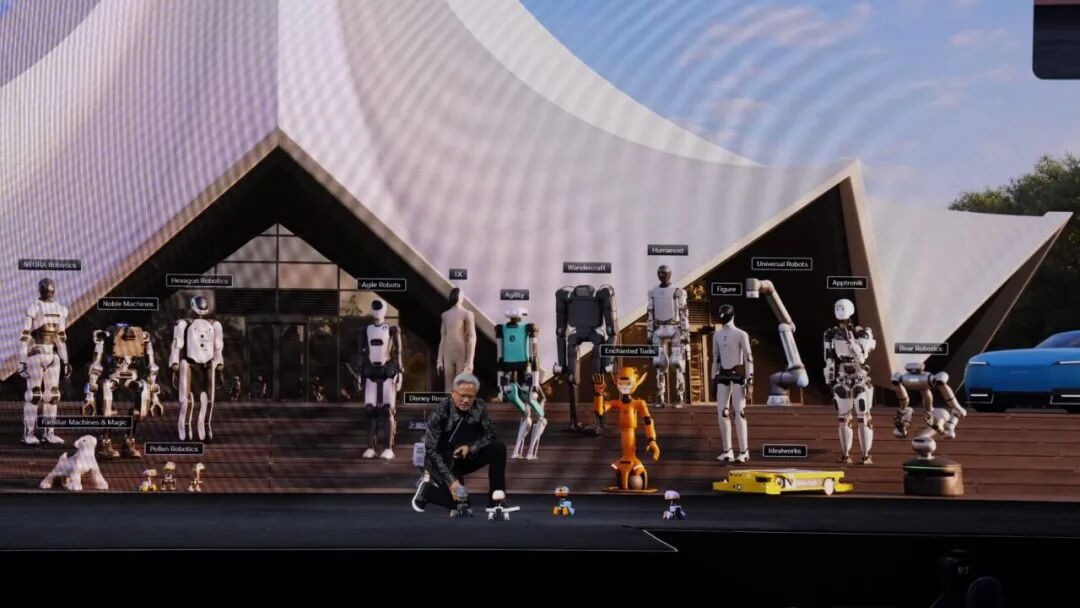
With Microduck looking on, Huang summarized the keynote: Europe is building its AI economy, AI factories are evolving to run agents, and physical AI is the next frontier.
"That is it. Everyone can build agents. Every company here will become an AI company, and the AI economy here will thrive," Huang said.
Huang closed the keynote by saying, "Let us build Europe's AI economy together and put AI to work. Have a great GTC."